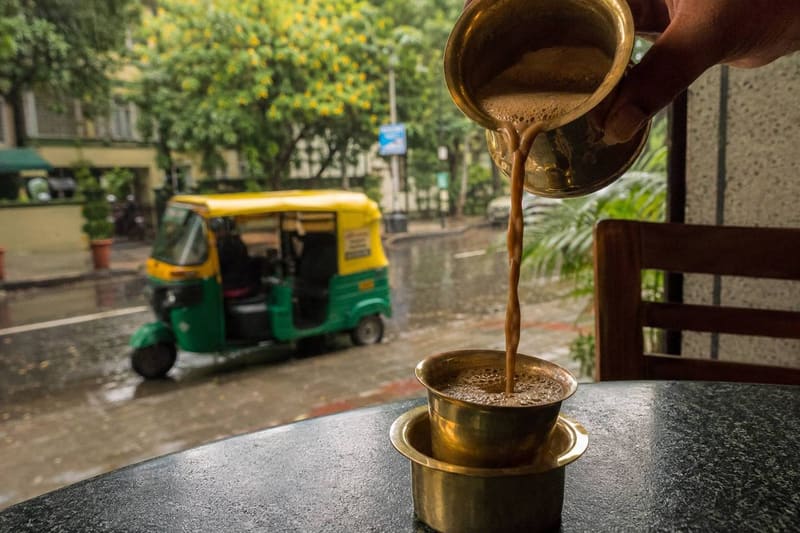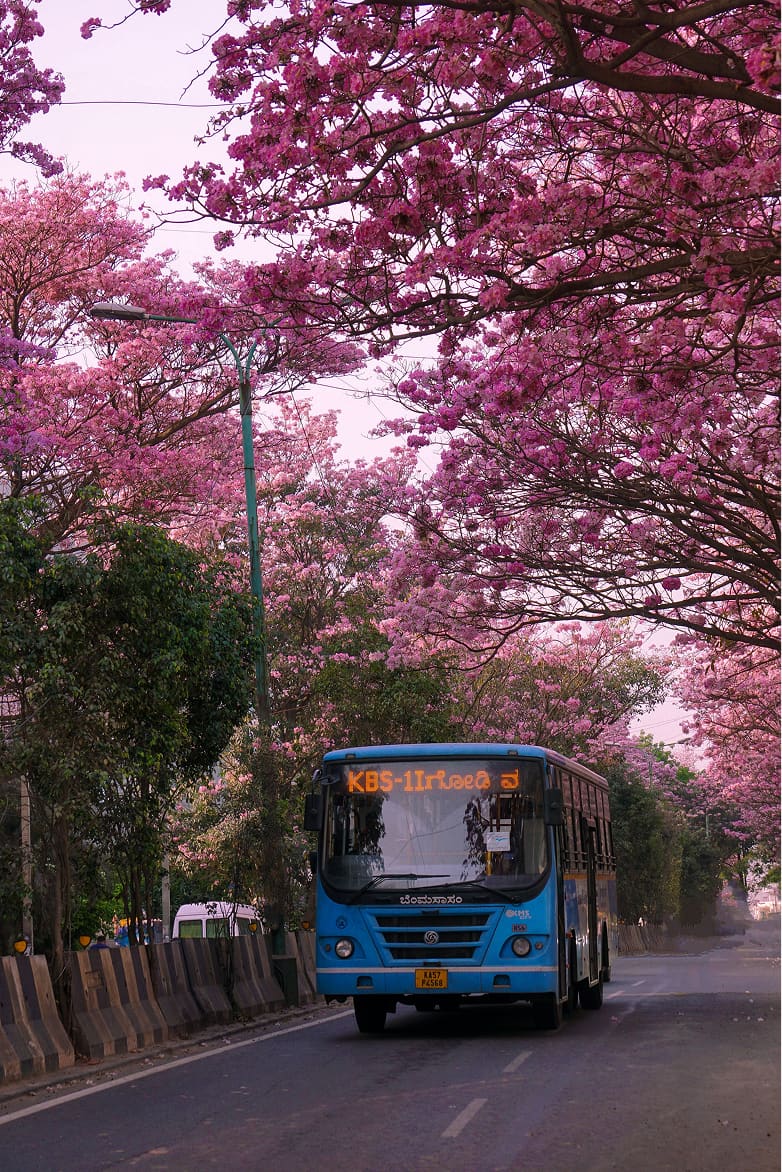
Bangalore is world-renowned as the Silicon Valley of India. However, behind the facade of tech giants and modern skyscrapers lies another, much more poetic title — the Garden City. Year after year, this metropolis undergoes incredible botanical transformations, painting itself in every color of the rainbow strictly on schedule.
Yet, few people know that all this lush splendor is not a generous gift of wild nature, but the result of brilliant human calculation.
How a Semi-Arid Plateau Turned into a Blooming Paradise
Originally, Bangalore and its surroundings were far from green. The city sits on a semi-arid plateau that was once home to nothing but sparse thorny scrub and dry, deciduous vegetation. Due to a chronic lack of water, large trees simply couldn’t survive here on their own.
Today’s blooming ecosystem is the legacy of visionary planning by the Maharajas of Mysore and the German botanist Gustav Hermann Krumbiegel. In the early 20th century, the scientist developed a unique concept for the city called “serial blossoming.” Thanks to his precise calculations, different streets across the city burst into vibrant colors one after another, taking turns to bloom all year round.
Botanical Guide: What, Where, and When Blooms in Bangalore
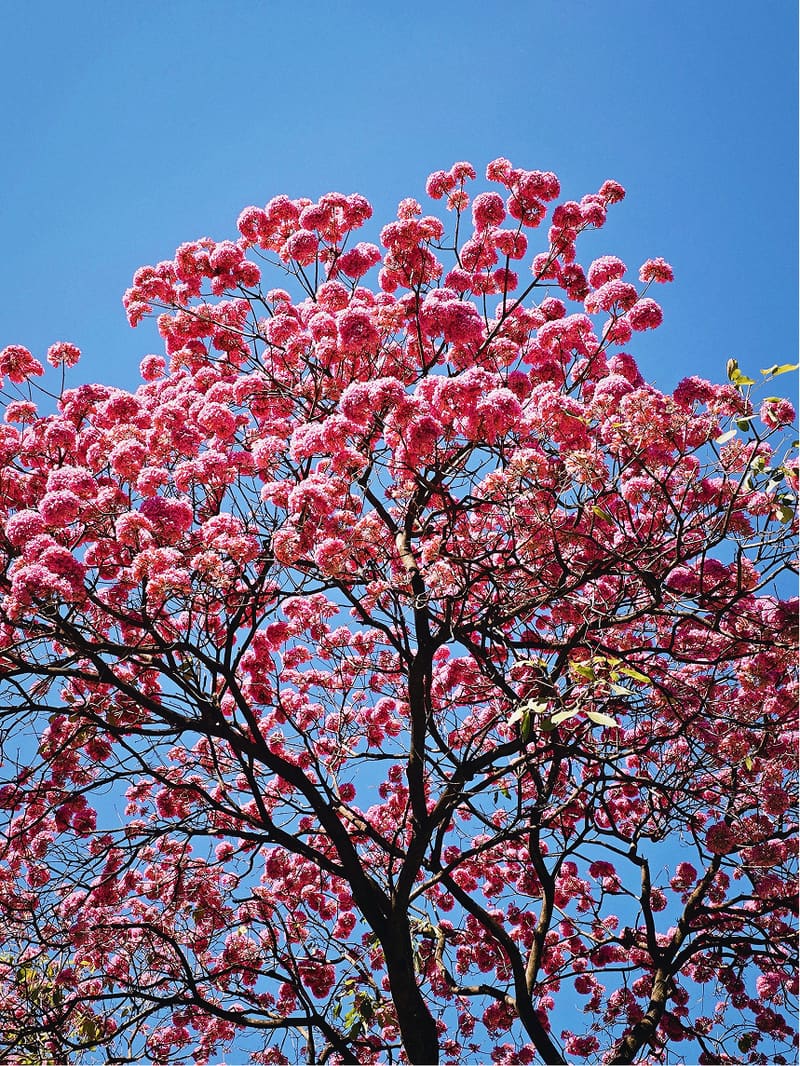
Tabebuia
Origin: Central America.
When to catch it: February — March.
Location: Lavelle Road.
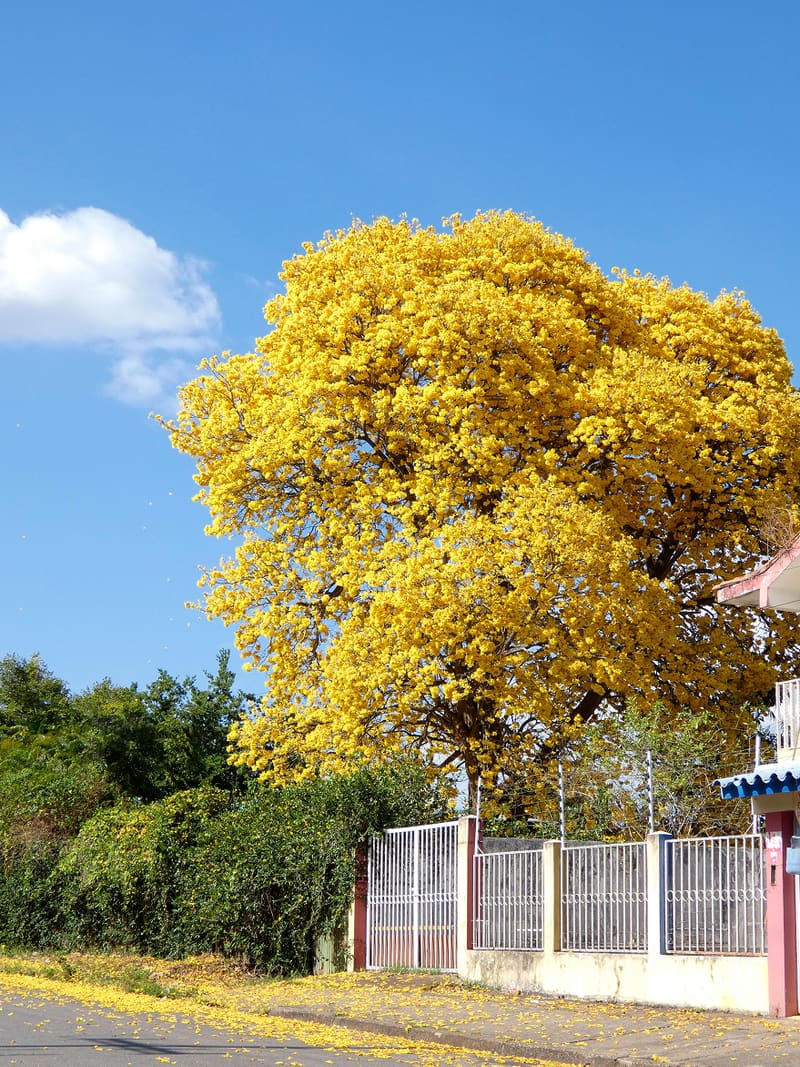
A stunning tree with a fascinating trait: it completely sheds its leaves right before blooming. In February, the city streets explode with a dazzling golden-yellow hue. By March, the delicate pink Tabebuia takes over the baton, turning the pavements of Lavelle Road into a solid, vibrant floral carpet.
Jacaranda
Origin: South America.
When to catch it: March — April.
Location: Sankey Road, Indian Institute of Science (IISc) campus.
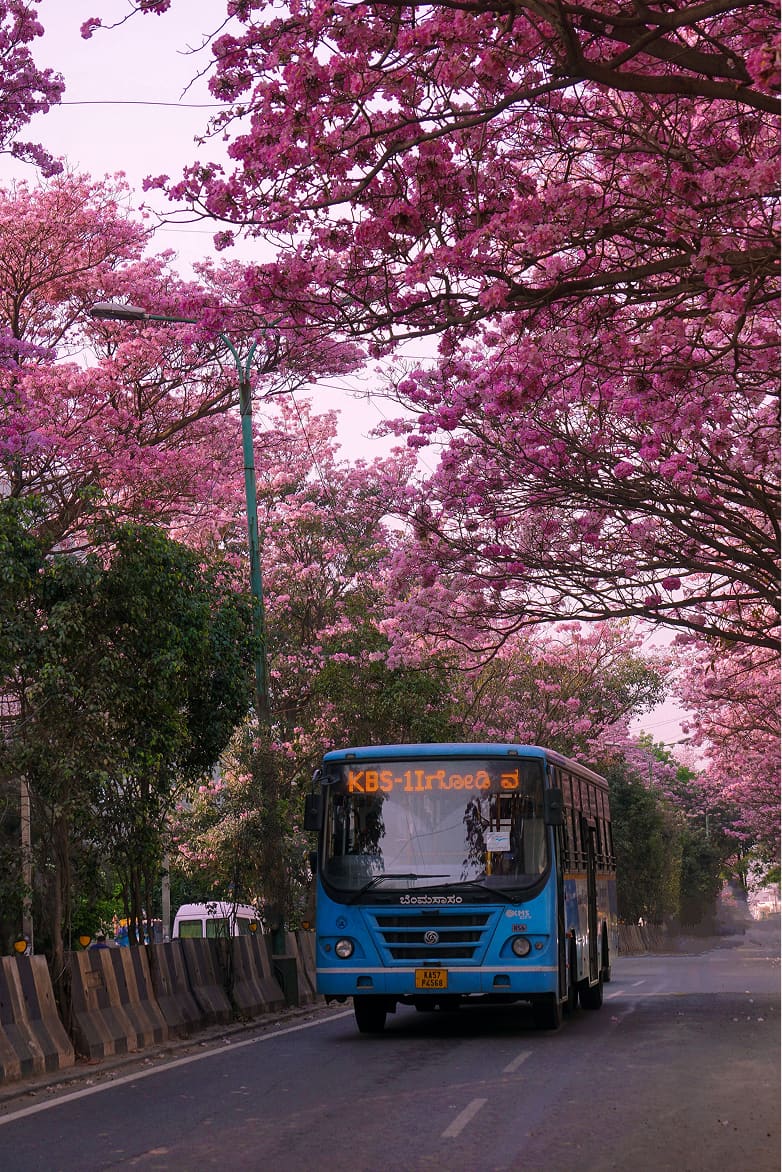
In the middle of spring, peak bloom transforms the crowns of Jacaranda trees into dense, purple-lilac clouds. Krumbiegel didn’t plant these trees just for their looks; their thick, lace-like canopy provides immense shade and a powerful cooling effect, rescuing the city from the spring heat.
Gulmohar
Origin: Madagascar.
When to catch it: May.
Location: Sadashivanagar.

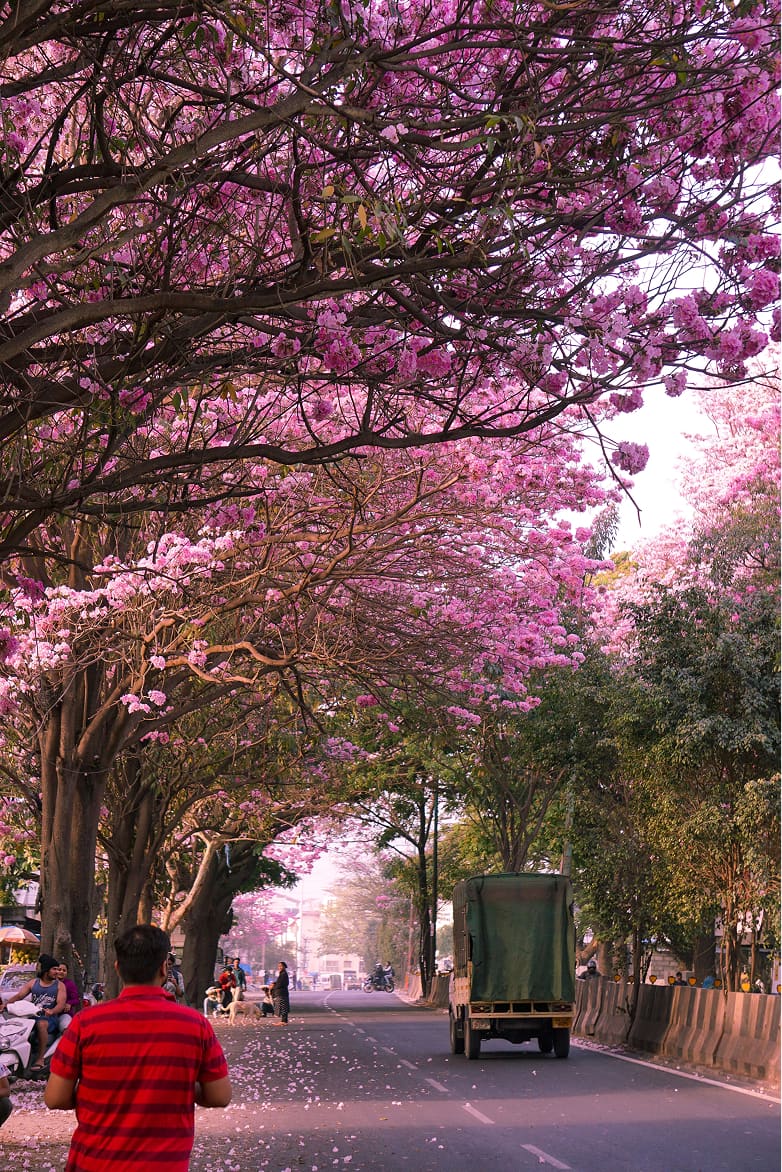
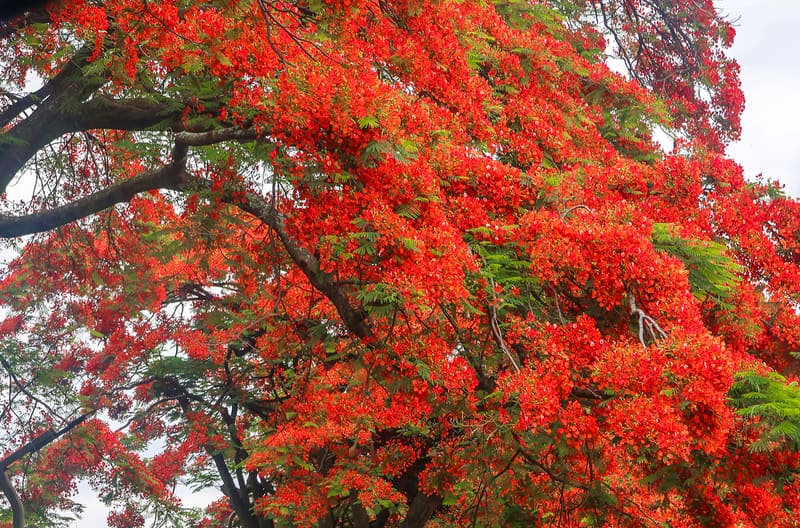
Deservedly known as the “Flamboyant” or “Fire Tree,” the Gulmohar bursts into bright red and fiery orange blossoms in May. It features a wide, umbrella-like canopy. In the Sadashivanagar area, these trees were intentionally planted on both sides of the streets so that as they grew, their branches would interlock overhead, creating a life-saving green tunnel against the scorching sun.
Rain Tree
*Origin: Tropical America.
When to catch it: Spring.
Location: Cubbon Road.*
Massive giants with heavy, sweeping branches line Cubbon Road. The tree earned its name from a unique characteristic: its leaves fold up at dusk and before a storm, allowing rainwater to drop directly to its roots, while opening wide on sunny days to cast an impenetrable shadow. In spring, the Rain Tree is covered in fluffy, pink, brush-like blossoms.

Banyan
Origin: Native, sacred to India.
When to catch it: Year-round.
Location: Lalbagh Botanical Garden.
*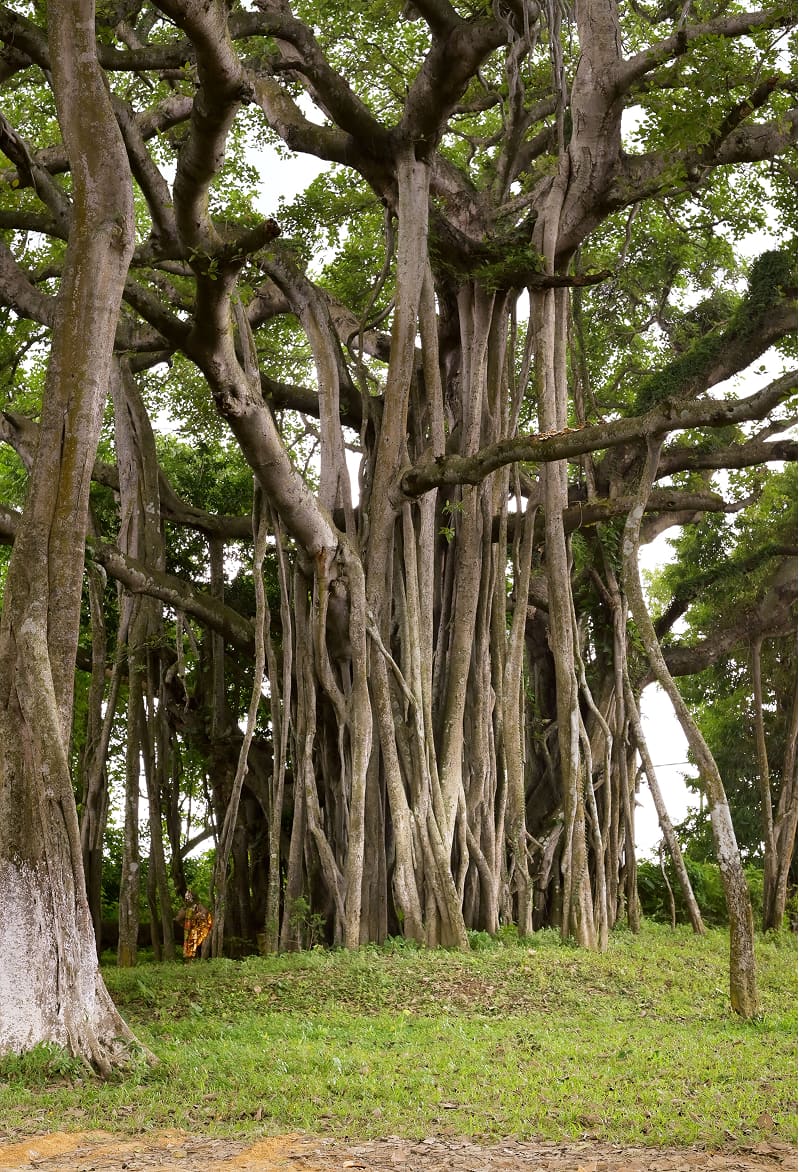
A sacred, long-living marvel that essentially clones itself. Its aerial roots drop down from the branches, take root in the soil, and develop into new, independent trunks. Over 250 years, the ancient Banyans in Lalbagh Botanical Garden have expanded into entire isolated groves. Interestingly, the Banyan blooms in secret: its flowers are hidden inside round, red, fig-like fruits that local squirrels and birds absolutely love to feast on.
Photo credits: Pexels (Hayde Vasquez Gamero, Ankit Bhattacharjee, Albin Biju, Claiton Conto), as well as the author’s personal archives.