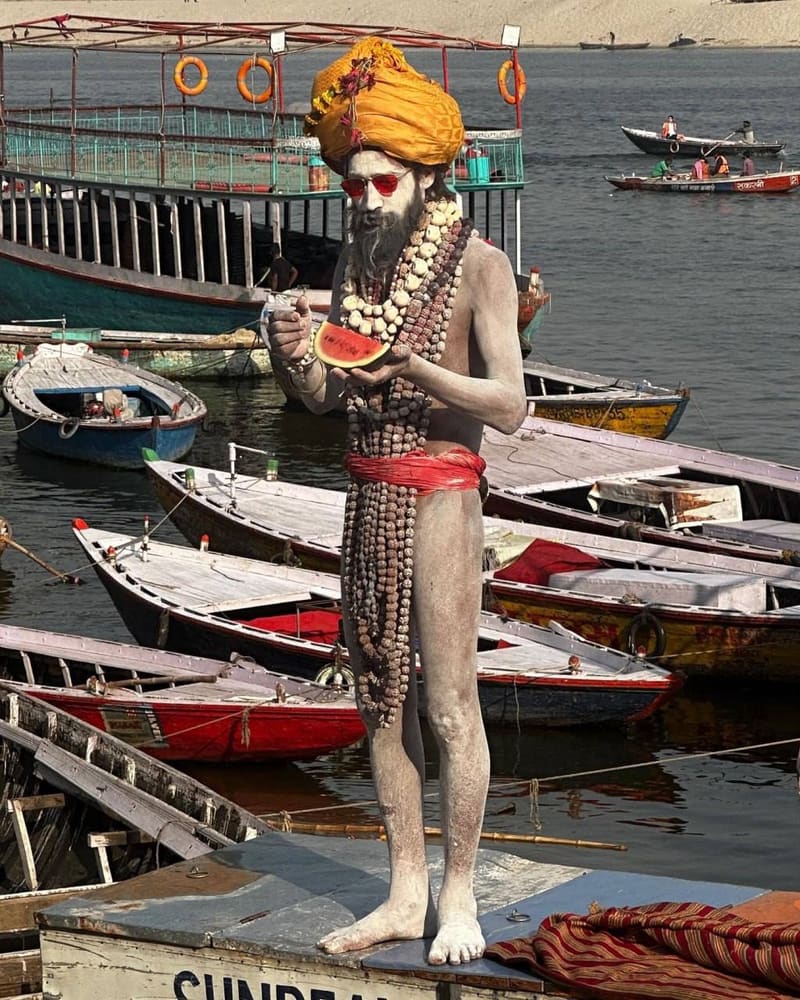
India is a country where the sacred and the everyday are so tightly interwoven that the line between them practically vanishes. Millions of locals wear symbols that travelers often mistake for ordinary costume jewelry or ethnic fashion.
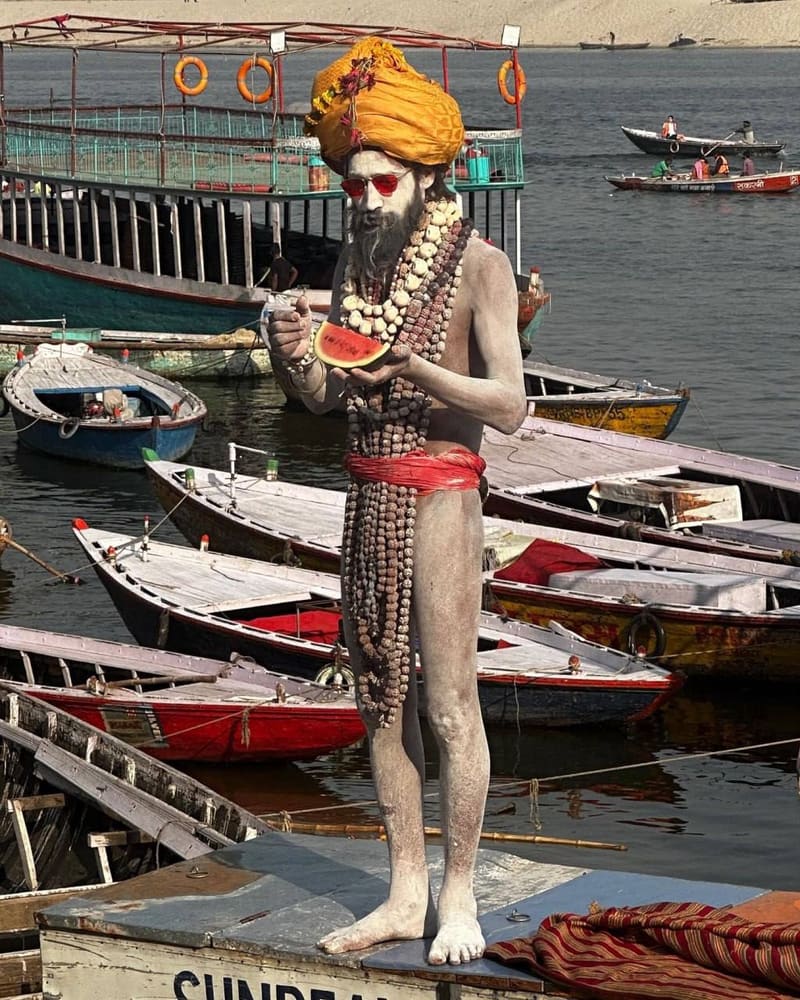
But for an Indian, a bracelet on the wrist or beads around the neck are not just accessories. Behind every single item lies a profound philosophical meaning, a connection to a specific deity, personal vows, and centuries-old tradition.
I constantly wear several of these symbols myself. Let’s break down what India’s main sacred symbols hide within them, the traditions they are tied to, and where to look for authentic artifacts rather than cheap souvenirs.
1. Mala and Kanthi-mala: A Connection to the Absolute
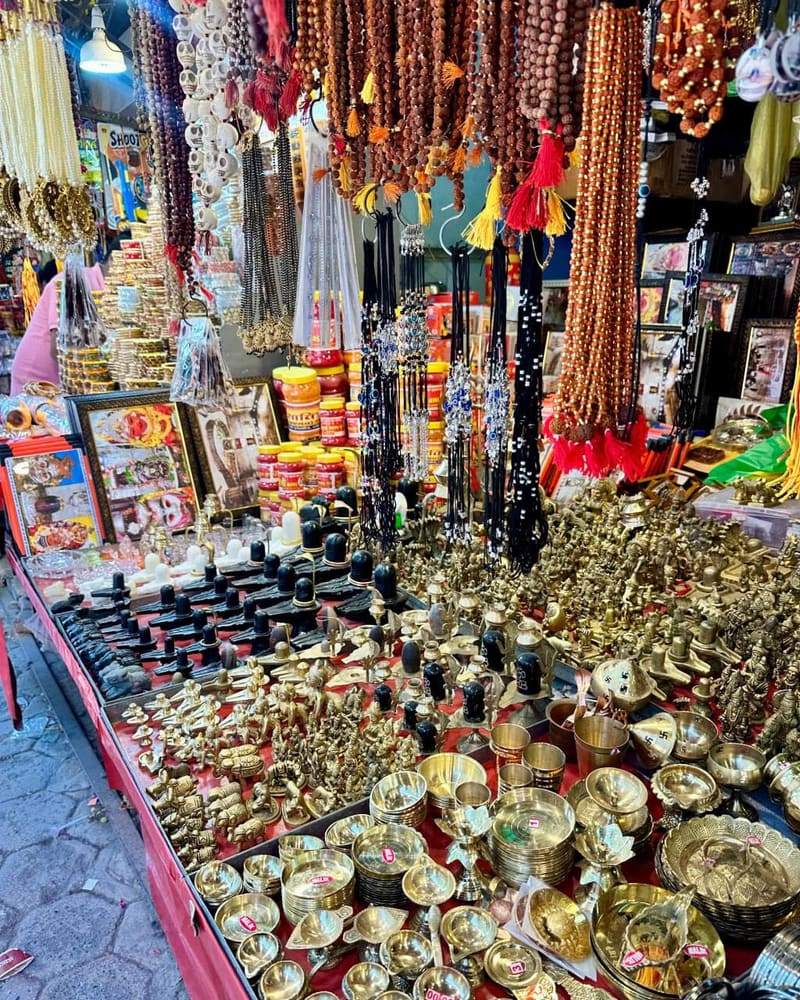
Most people are familiar with the mala—a string of 108 beads used for meditation and chanting mantras. But there is another form: the kanthi-mala. These are shorter necklaces worn snugly around the neck, often in multiple strands.

- What they are made of: Most commonly from the wood of tulasi (holy basil), which is revered in Hinduism as the earthly manifestation of the goddess of devotion.
- The Symbolism: A tulasi kanthi-mala is inextricably linked to the Vaishnava tradition (the worship of Vishnu and Krishna). It signifies that a person strives to live in harmony with higher spiritual laws.
- Personal Experience: I wear my tulasi constantly and never take it off. If you are looking for authentic kanthi-malas or meditation beads, you should head to the holy cities of Vrindavan or Mayapur.
2. Kavacha: A Sacred Capsule of Protection
Kavacha (which translates to “armor” or “shield”) is a miniature metal container that resembles a pendant. Its deeper meaning lies entirely in what is inside.
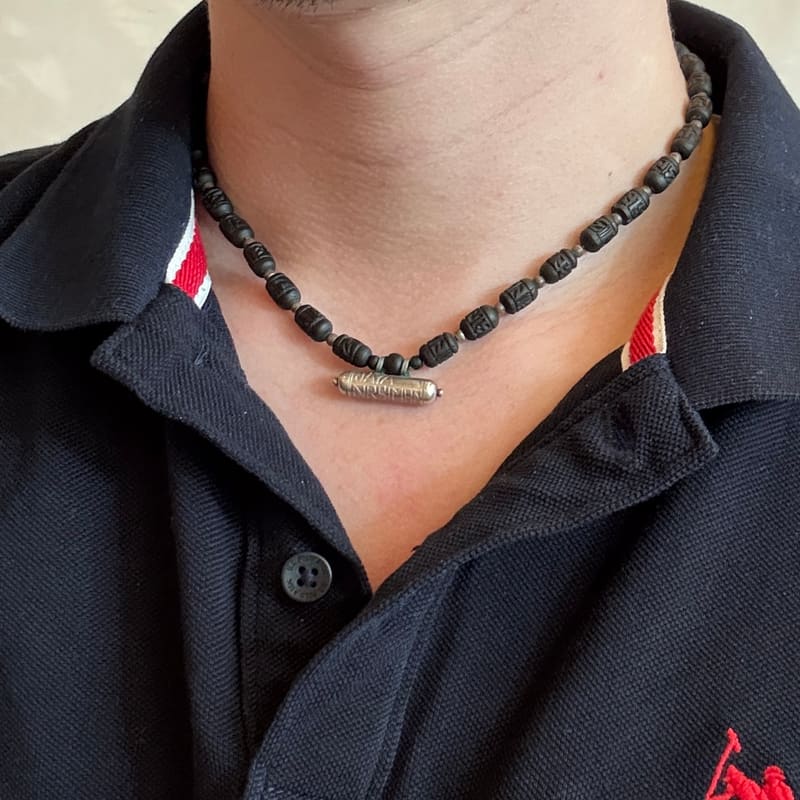
A sacred object is placed within the kavacha: a small scroll with an engraved mantra, sacred dust from a pilgrimage site, a piece of cotton dipped in Ganges water, or sacred ash (vibhuti). After that, the capsule is hermetically sealed shut.
- The Symbolism: This is a physical reminder of divine protection. Kavachas are most often associated with the protective energies of Hanuman, Shiva, or Narasimhadeva.
- Where to find them: The kanthi-mala around my neck happens to be connected to a kavacha containing a Narasimhadeva mantra, which I brought back from Mayapur. You can find these protective sacred symbols in abundance at temple stalls in Rishikesh or Vrindavan.
3. Kara: The Steel Circle of Infinity
If you look down at my wrist, you will notice a kara—a minimalist, weighty steel bracelet with no joints, seams, or ornaments.
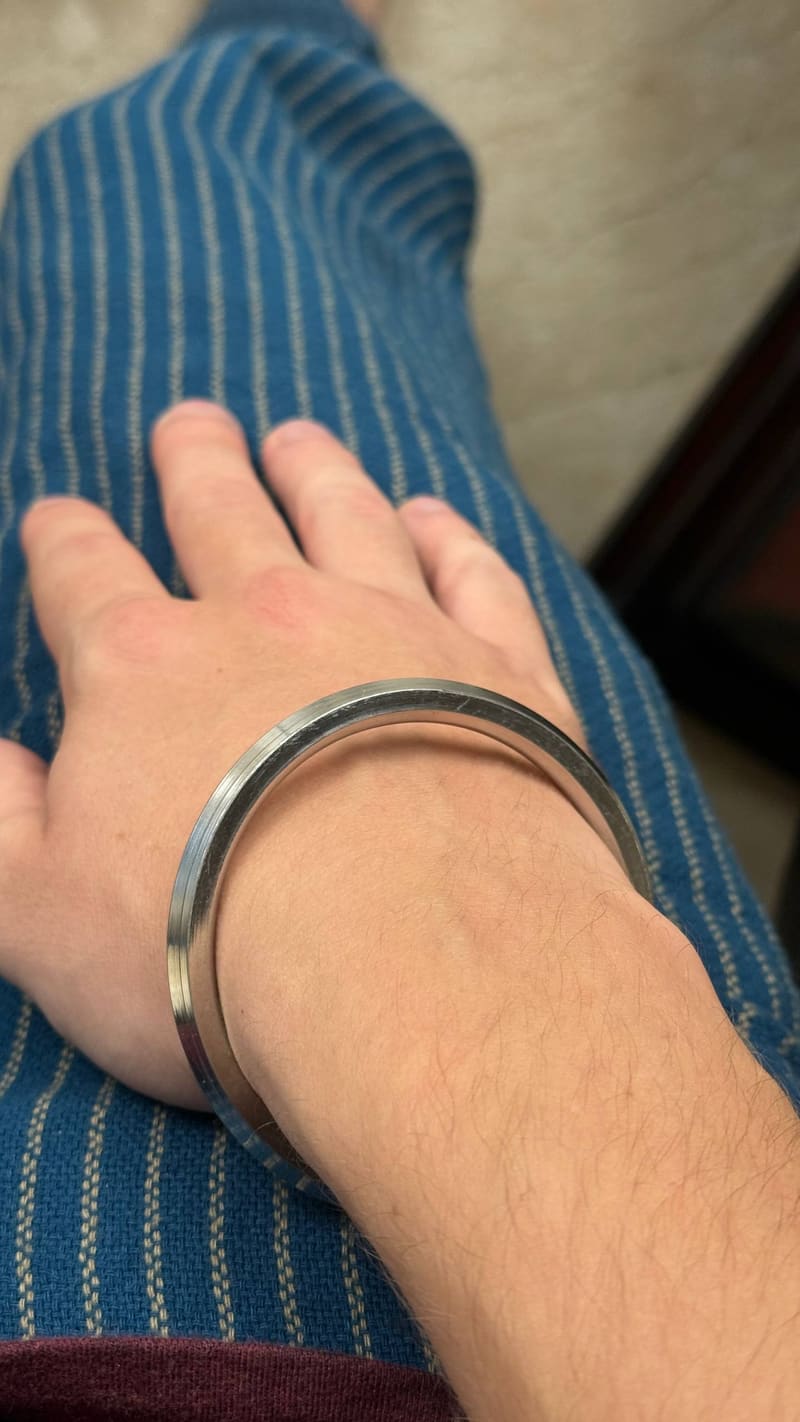
- The Origin: This is one of the five primary articles of faith (the “5 Ks”) in Sikhism. The circle symbolizes God, who has no beginning and no end, while the steel represents strength of spirit and purity of intent. Worn on the right wrist, the bracelet serves as a constant reminder: “Do no wrong; your hands belong to God.”
- Personal Story: My kara is Punjabi—a deeply meaningful gift from my sister.
- Where to find them: To find a proper, canonical kara, you need to travel to northern India, to the state of Punjab—specifically to the city of Amritsar, home to the legendary Golden Temple (Harmandir Sahib).
4. Rudraksha: The Tears of Shiva
Perhaps the most recognizable symbol of India is the rudraksha, the dried seeds of the Elaeocarpus ganitrus tree. According to legend, these are the frozen tears of compassion shed by Shiva as he looked upon human suffering.
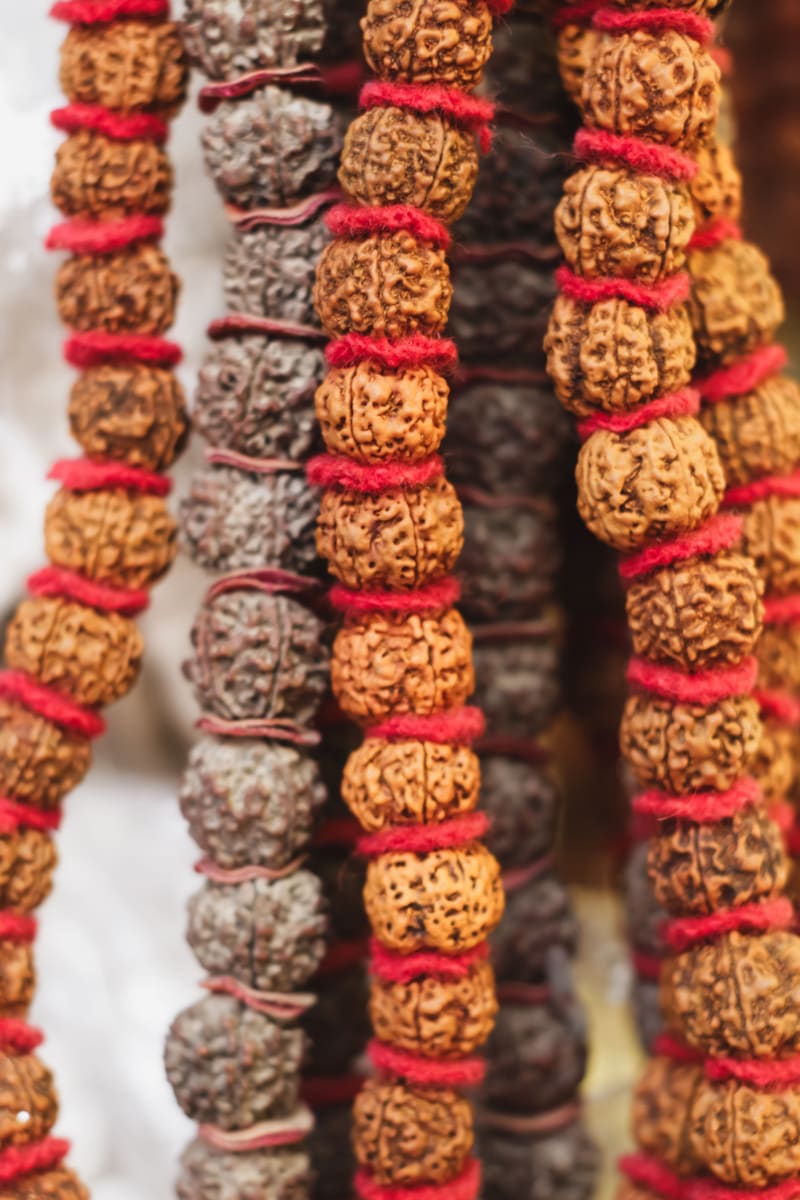
- The Sacred Science: An entire science surrounds the rudraksha. The seeds are categorized by the number of faces or facets (mukhis) they possess. The five-faced seed is the most common, but rare single-faced or multi-faced seeds exist, with prices reaching thousands of dollars.
- Beware of Counterfeits: Indian markets are flooded with plastic and wooden imitations. To find a genuine, energetically potent rudraksha, head to the cultural epicenters of Shaivism: Varanasi, Ujjain, or any of the 12 sacred Jyotirlinga temples.
Spiritual Etiquette and the “Wedding Ring Effect”
If you want to bring back a genuine symbol from India rather than just a tourist souvenir, remember the golden rule: never buy them at ordinary clothing or flea markets. Go straight to the temples. The shops near temples care about their reputation; they keep an eye on the quality of the materials, and the items themselves are often already blessed.

In many Hindu traditions, wearing a kanthi-mala, rudraksha, or other sacred symbols is a sign of vows taken. They serve as a reminder of a chosen path: vegetarianism, giving up bad habits, abstaining from extramarital or promiscuous sexual relationships, maintaining spiritual discipline, practicing prayer, and striving to live according to dharma.
In the Vaishnava tradition, the kanthi-mala is often compared to a wedding ring. If someone breaks their marriage vows, the ring doesn’t magically vanish from their finger. Yet, the act still carries heavy weight because a promise was broken. The logic with sacred symbols is exactly the same: their power lies not in the material itself, but in your fidelity to what they symbolize.
A sacred symbol is not a magic pill that “works” on its own. First and foremost, it is a mirror reflecting your own path, your values, and your inner connection to the Divine.
\