Even when I am outside of India, I find myself randomly drawn to sacred places of power. The most amazing part is that I usually stumble upon them completely by chance. That is exactly what happened during my trip to Azerbaijan, where I discovered a stunning Fire Temple called Ateshgah.
Fire Burning Without Wood: How Indian Merchants Founded a Temple in Baku
Ateshgah (which translates from Azerbaijani as the “House of Fire”) is an ancient temple complex in the village of Surakhany, just 20 kilometers from the center of Baku. It is a unique place where the destinies and traditions of Zoroastrians, Hindus, and Sikhs have woven together in a fascinating way.

The history of this place reads like a legend. Centuries ago, Indian merchants traveling along the Great Silk Road reached the Absheron Peninsula. They were struck by an incredible sight: an inextinguishable flame was bursting straight out of cracks in the ground, without any wood, kerosene, or matches. The earth was literally breathing fire due to natural gas vents.
Awestruck by this miracle, pilgrims and merchants built a temple around the source of the flame, which continues to welcome travelers to this day.
For Hindus, the temple’s central altar became the equivalent of a havan kund. Sacred havans—rituals of fire offerings to the god Agni—were performed at this eternal flame. Interestingly, the Sanskrit name of the fire god, Agni, sounds strikingly similar to the Russian word “ogon” (fire). This serves as another reminder of how deeply, and from what ancient common roots, our reverence for the flame grows as a bridge between the earthly and the divine.
What Do the Walls of the Ancient Cells Hide?
In the 20th century, the complex was restored and turned into an open-air museum. The architecture of Ateshgah is mesmerizing:
- The Courtyard and Cells: Modest rooms line the entire perimeter, where pilgrims lived, prayed, and practiced asceticism for centuries.
- Traces of History: Inscriptions carved into the stone in Sanskrit and the languages of Northwestern India are still preserved on the walls and above the entrances to the cells. Here, you can make out mantras, the names of Vedic deities, and the names of those who found their spiritual home here.
Once, dozens of these natural torches burned across this territory. Today, only one remains—the main fire in the central altar, which is now artificially fueled for preservation. But believe me, the sacred atmosphere of this place has not faded at all.

About the City of Baku
Baku became another wonderful discovery for me. It is an incredibly beautiful, well-kept, and stylish city that left me with the warmest memories.
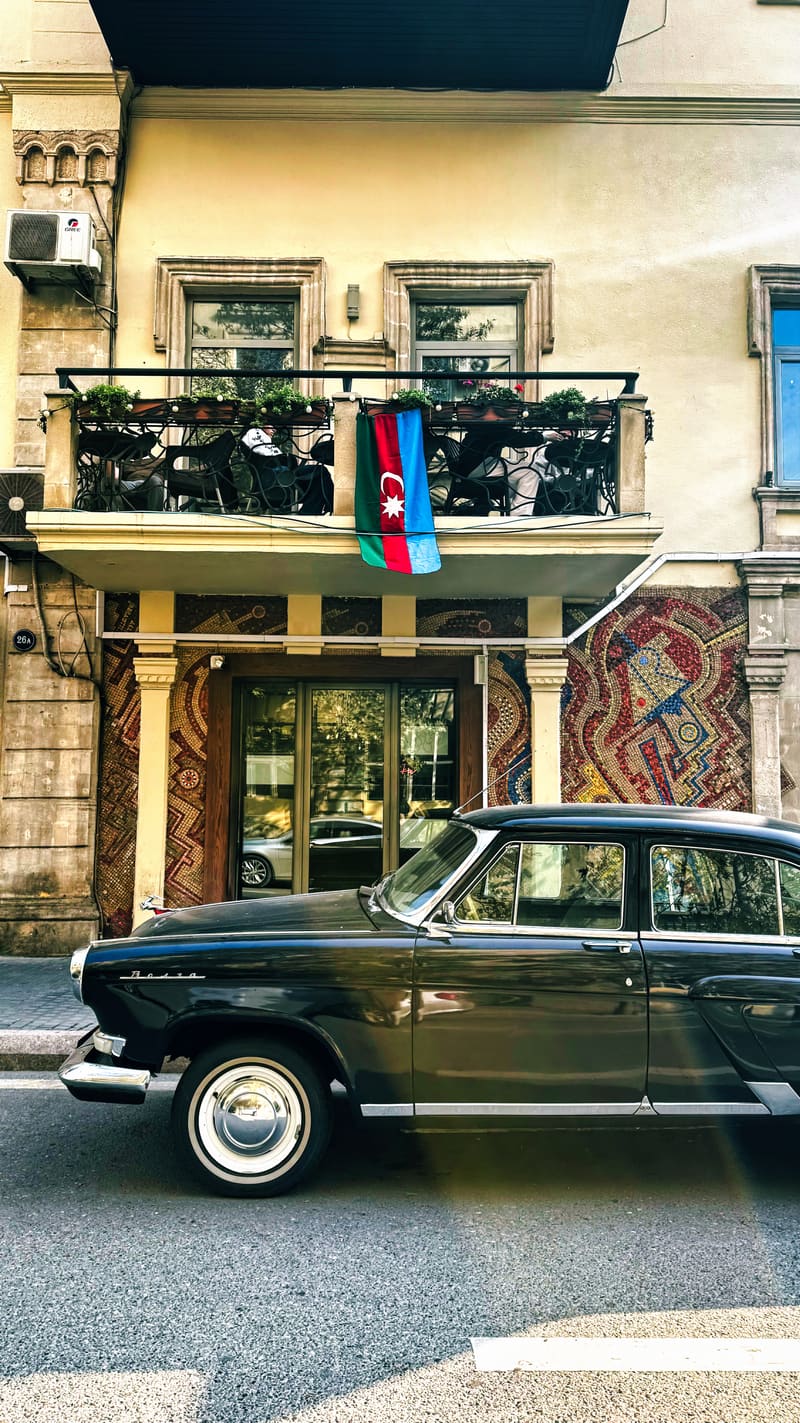
At one point, while walking through the center among the exquisite historical architecture, you start to feel as though you are in Paris. Then, just a couple of blocks away, a luxurious, endless promenade opens up before you, complete with a massive green park and the futuristic building of the Carpet Museum.
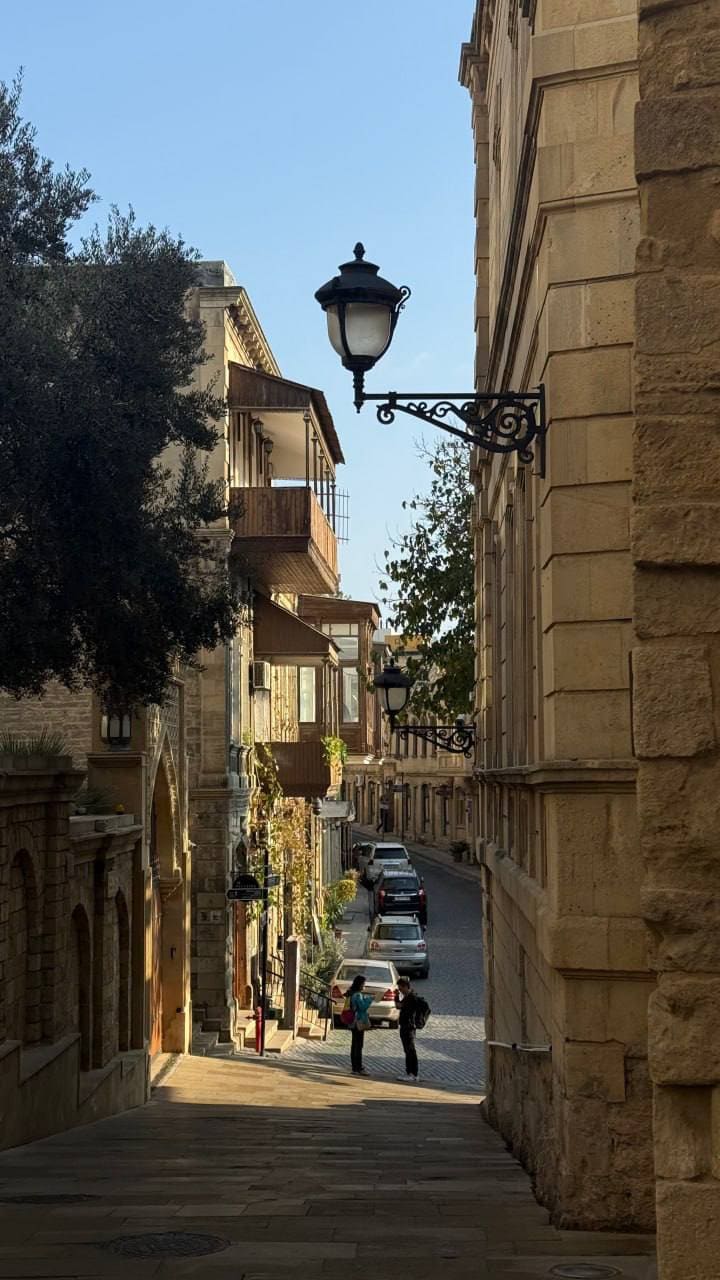
Baku is incredibly vibrant and modern. There is a real culture here surrounding cozy cafes, great restaurants, and soulful bookstores. And as a nice bonus for those who, like me, do not eat meat: the local gastronomy turned out to be very vegetarian-friendly. Finding a stunning, juicy vegetarian lyulya-kebab and a ton of other authentic meat-free dishes was absolutely effortless.

If you are looking for a destination where Eastern flavor, European chic, and profound ancient meanings come together — Baku should definitely be on your list.